NASA will send a nuclear-powered rover built from Mars spares to the moon
Blue Origin gets $94 million to land PROMISE in late 2028, as NASA opens a lunar cargo contract worth up to $10 billion.

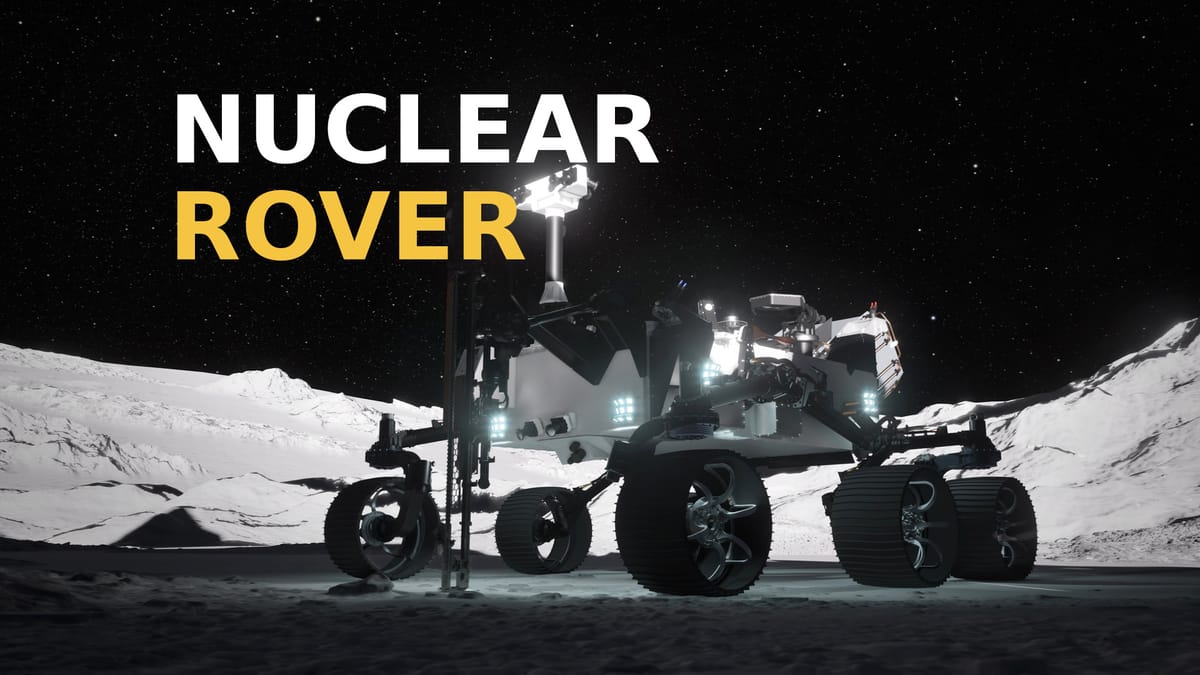
NASA is moving ahead with PROMISE, a six-wheeled, nuclear-powered rover that will hunt for water ice near the moon's South Pole, the agency announced Saturday (Nov. 7) at its MAX POWER event at Kennedy Space Center in Florida.
The rover's name is short for Polar Rover for Observation, Mapping, and In-Situ Exploration. NASA's Jet Propulsion Laboratory will build it from spare flight parts and engineering test models made for the Curiosity and Perseverance Mars rovers. NASA is targeting a late-2028 launch and an 18-month mission.
Blue Origin won a $94 million base contract, with a $140 million option tied to performance, to land PROMISE on the moon with its Blue Moon Mark 1 lander.
A Mars rover's twin goes to the moon
Reusing Mars hardware is the point. NASA says proven hardware, software and rover operations cut cost and let JPL test the rover on a shorter timeline. The agency says it checked that the parts can handle the conditions near the lunar South Pole.
According to NASA's mission page, JPL is converting the electronics, body and wheels of the Earth-bound Curiosity twin that engineers have used as a test bed for the Mars mission. Like Curiosity and Perseverance, PROMISE runs on a radioisotope power source instead of solar panels.
That matters at the South Pole. Nuclear power lets the rover keep working through the two-week lunar night and drive into permanently shadowed craters, where scientists think ice may be trapped. Solar-powered rovers struggle with both.
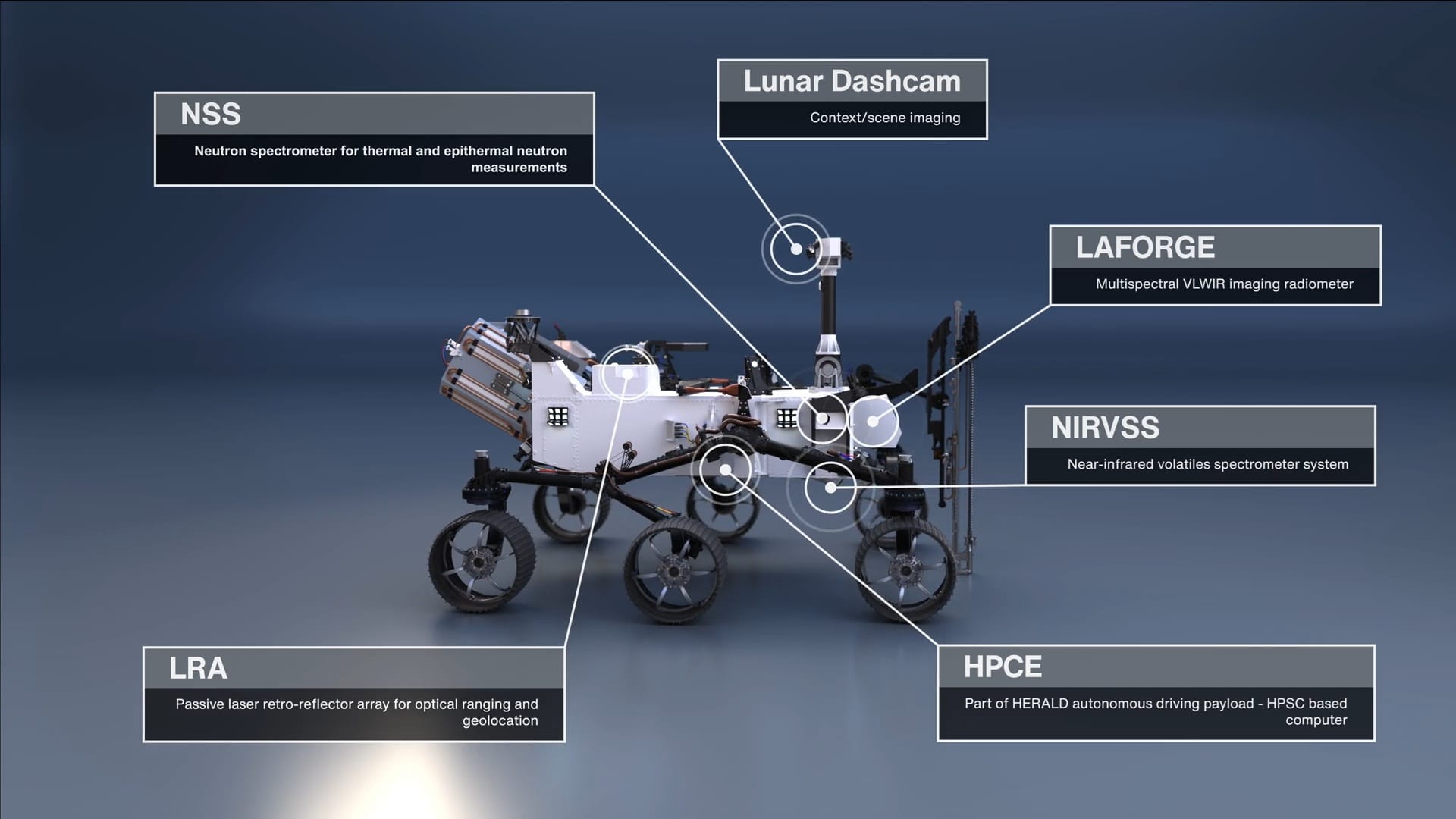
The rover will carry a drill that pulls up soil from about 3 feet (1 meter) down, spectrometers to read its chemistry, temperature and radiation sensors, and cameras. It will also test a new radiation-tolerant computer, NASA's High Performance Spaceflight Computing chip, along with self-driving software. NASA wants the data to help pick landing sites and plan the Moon Base it hopes to have astronauts using by 2032.
Moon Base Program Manager Carlos García-Galán said NASA expects the mission to cost under $400 million, including the instruments and the ride to the moon, Payload reported. NASA Administrator Jared Isaacman first floated the idea of sending a Mars rover twin to the moon in June, Space.com noted.
A bigger lunar cargo pipeline
PROMISE was one of several Moon Base awards on Saturday. The largest by ceiling is CLPS 2, the next phase of NASA's Commercial Lunar Payload Services program. Eight companies can now compete for delivery missions: Blue Origin, Firefly Aerospace, Intuitive Machines, ispace-U.S., Lockheed Martin, Northrop Grumman, SpaceX and Voyager Technologies.
The 10-year contract has a combined maximum value of $10 billion. That is a ceiling for future task orders, not money already awarded. García-Galán said it is built for bigger landers carrying 2 to 6 metric tons, according to Payload.
"Under the current CLPS contract, it's all or nothing, which might be fine if you're only doing one or two of those per year," Isaacman said at the briefing. "But when you're trying to scale up to what we're talking about today, you want to have the flexibility to move pieces around."
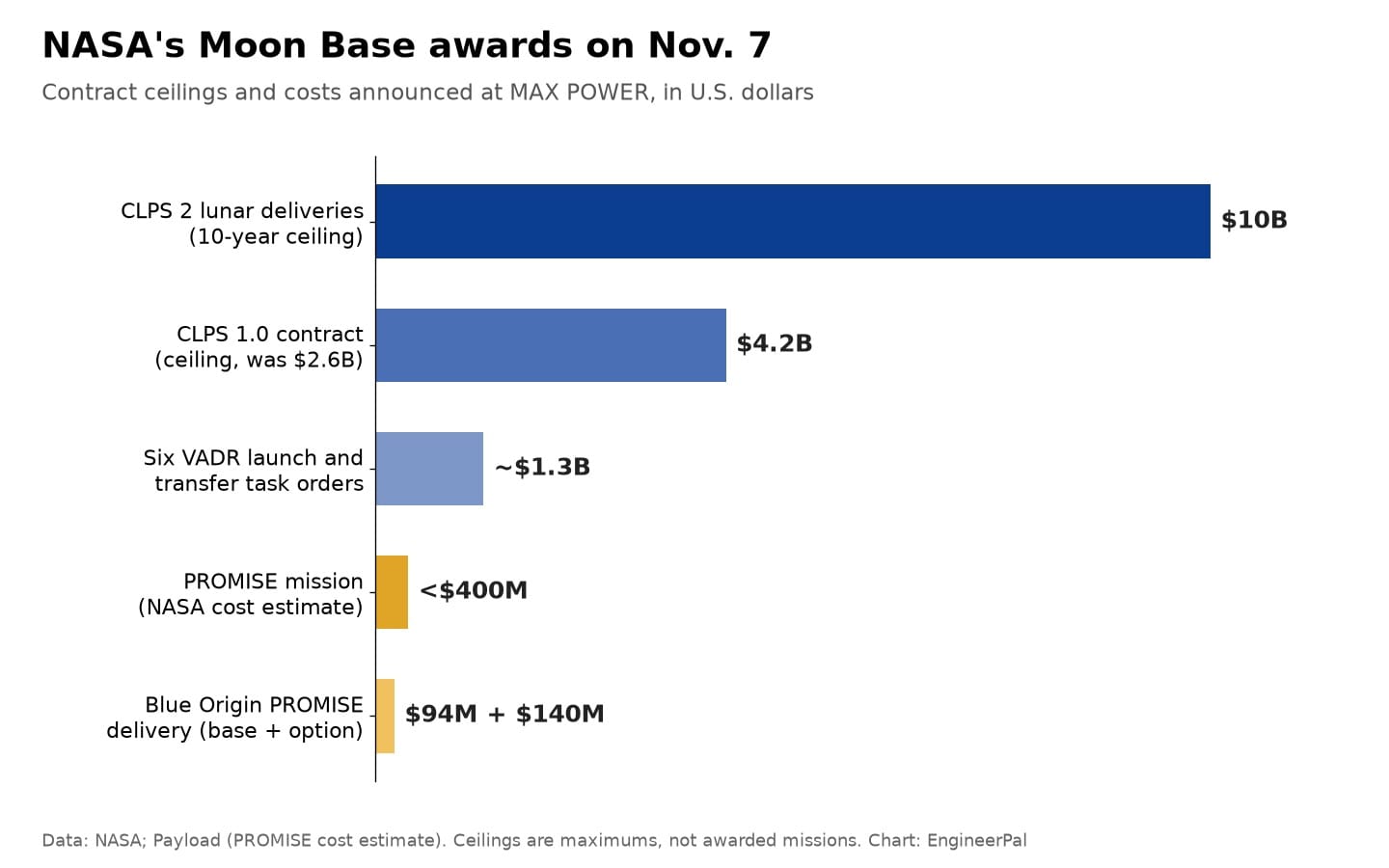
NASA also raised the ceiling of the original CLPS contract from $2.6 billion to $4.2 billion to cover early Moon Base missions. It handed out six launch and orbital transfer task orders worth about $1.3 billion to Arrow Science and Technology, Blue Origin and Impulse Space, flying on New Glenn, Falcon 9 and Relativity Space's Terran R. SpaceX was picked for a lunar communications demonstration, and Honeybee Robotics, Redwire and Yank Technologies will build parts of a small power and communications tower for the lunar surface.
Blue Origin also needs New Glenn, which carries three of the new launch task orders, flying again. CEO Dave Limp told employees the rocket's return to flight after a launch pad explosion in May has slipped to early 2027, Bloomberg reported last week. PROMISE is due to launch about two years later.