Microsoft Research's AI Frontiers group is over, its co-founder says
John Langford says a move into Microsoft AI left no room for research, and the roughly 50-person group won't host interns next year.

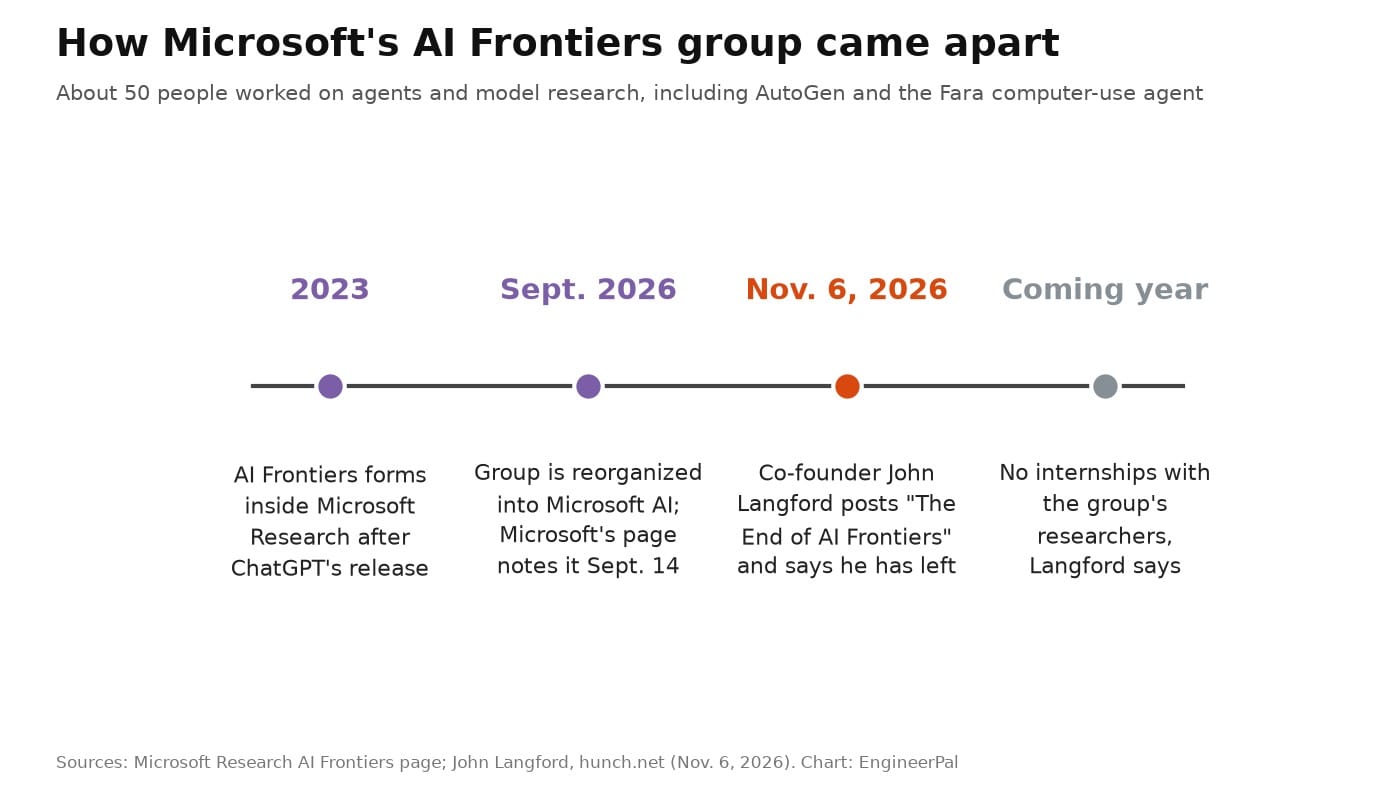
AI Frontiers, the roughly 50-person research group Microsoft set up inside Microsoft Research in 2023, is finished, according to co-founder John Langford. In a blog post titled "The End of AI Frontiers" published Friday (Nov. 6), Langford said he has left Microsoft after the group was folded into Microsoft AI in September.
The post spread quickly. Langford's X post sharing it had about 300,000 views by Sunday morning, and a Hacker News thread on it drew more than 270 comments.
The End of AI Frontiers https://t.co/rQOIpmthGr .
— John Langford (@JohnCLangford) November 6, 2026
There's a bit of a train wreck here that's painful to express. Nevertheless, it's a significant event for me and quite a few other folks involved so I wanted to memorialize a bit.
From research lab to scaling shop
Langford said AI Frontiers was formed after ChatGPT's release because lone researchers inside Microsoft Research could no longer move fast enough to compete. The group worked mostly on making AI agents work, including the AutoGen orchestration framework and the Fara computer-use agent. Researchers in New York also worked on new training methods, which he named as Next Latent, Dion3 and the Full Bandwidth Transformer.
In early September, the group was reorganized into Microsoft AI, the larger division led by former Inflection executives. Langford described its philosophy as "scaling, and aggressively not research," with most of the effort going into data rather than new methods. "There was plenty of evidence that they just did not really want us," he wrote.
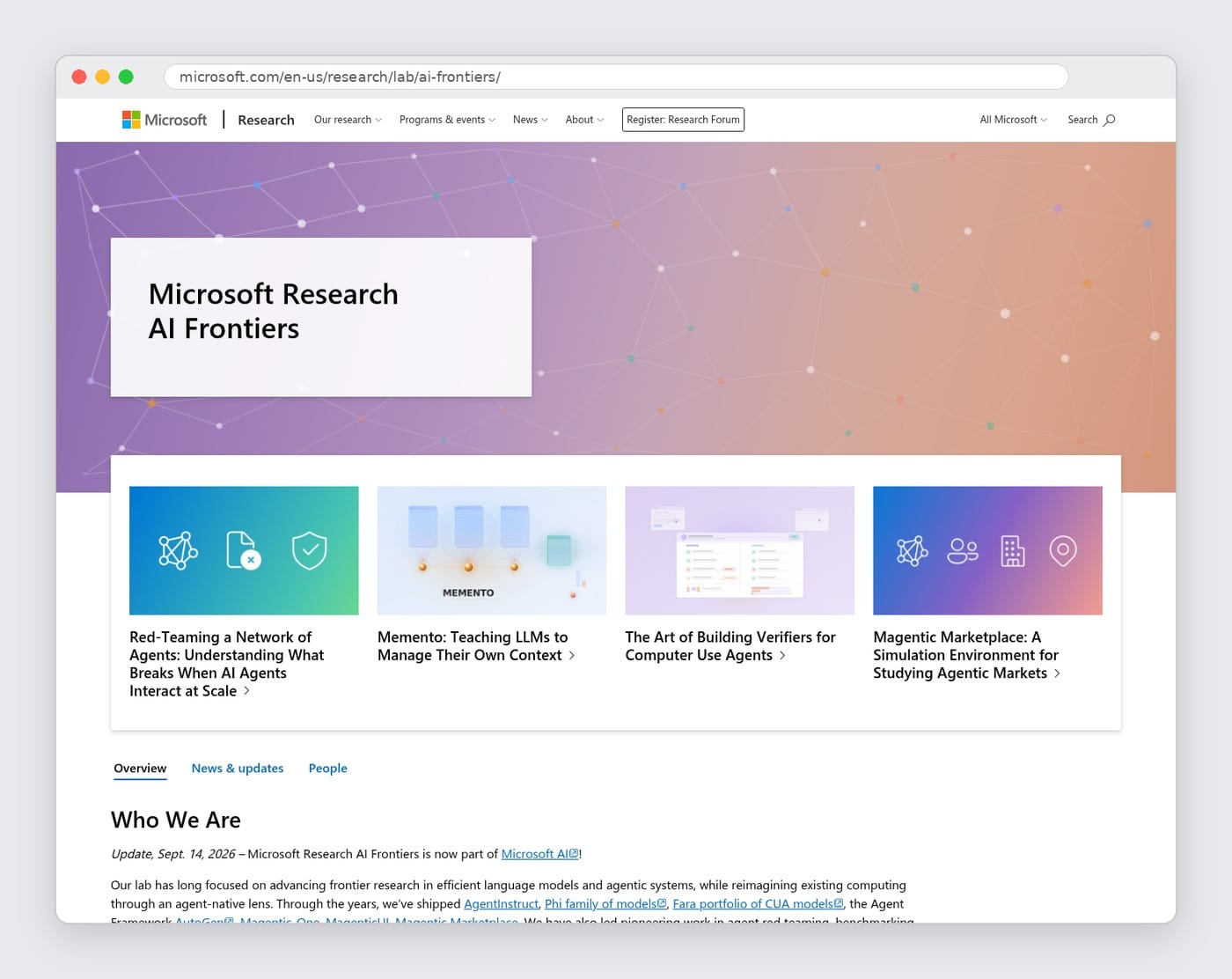
Microsoft's own AI Frontiers page still frames the move as a transition. An update dated Sept. 14 says the lab "is now part of Microsoft AI" and will pursue "our same goal of frontier and cutting edge agentic and model research" there.
What it means for the people inside
Langford said he "situated my folks as best I could and left," and that every other member of the founding leadership team "seems to have come to a similar conclusion." He did not say how many of the roughly 50 researchers are staying.
He also said he would not go back to Microsoft Research. His reasons were that his work had "no path to real use" and that the lab's basic deal of "do good work and good things happen" had broken down when the group was "non-consensually reorged away."
For students, the clearest change is a lost pipeline. "There will not be internships with the folks there in the coming year," Langford wrote. Industry research internships like these are a common route into AI research jobs, so applicants who were targeting the group will need to look elsewhere in the next cycle.
The departure lands during a broader shake-up at Microsoft. On Oct. 26, the company opened a voluntary exit offer to about 60,000 employees at level 70 and below, roughly 27% of its workforce, CNBC reported. Eligible staff must decide by early December, and those who accept leave Dec. 31.
Langford's larger argument is about where AI progress comes from. He pointed to ByteDance experiments suggesting a variant of the Full Bandwidth Transformer could match a model twice its size, which would mean big savings on training and inference. "Returns to research are real and significant," he wrote.
He ended the post on a hopeful note. It is "not hard to imagine a Microsoft of the future which becomes attractive for research again," he wrote, "if the people in control can develop a little bit more wisdom."