Tesla reveals Roadster with SpaceX thrusters, targets 2028 production
The long-delayed sports car drove upside down and jumped Tesla's lineup in Texas, but Tesla still hasn't announced a price.

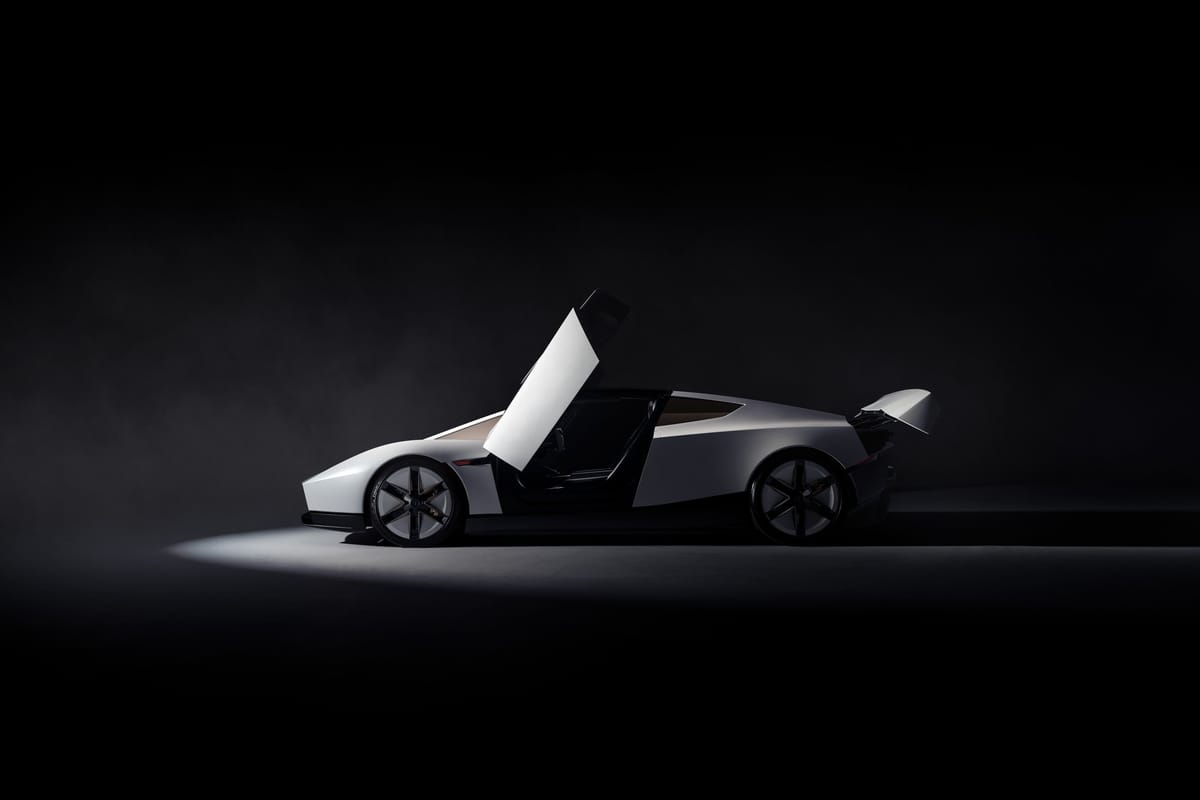
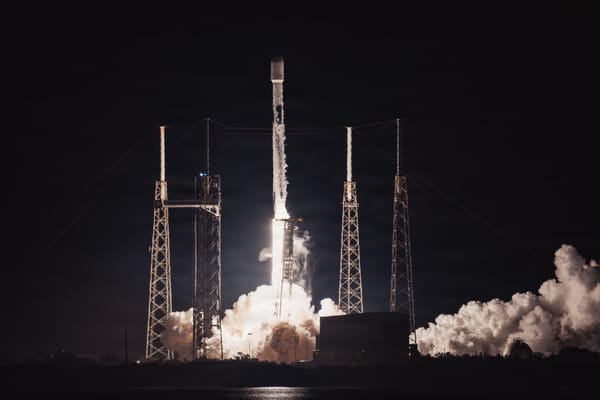
Tesla unveiled its second-generation Roadster on Thursday (Oct. 15) at SpaceX's test site in McGregor, Texas, where the car clung upside down to a ramp, then used cold-gas thrusters to flip off and land.
CEO Elon Musk said the car will go into production in 2028, according to The Verge. Tesla didn't name a price or a delivery date at the event, which ran less than 30 minutes.
"Now, I should say that this is not necessarily a safety-optimized car. But it takes the fun meter to 11 out of 10," Musk said on stage.
Tesla still hasn't published the car's weight, and none of its performance figures have been independently tested. Its website says the flying Rocket version is "not approved for public road use," Car and Driver reported. Asked whether the car would be street-legal, Musk said, "Depends on your street," according to Business Insider.
Tesla is taking reservations for three versions, according to its website as reported by The Verge and TechCrunch. All 0-60 mph times are Tesla claims:
- Performance ("Road Ready"): two seats, suction fans and active aerodynamics, no thrusters. Under 1.6 seconds. $50,000 deposit.
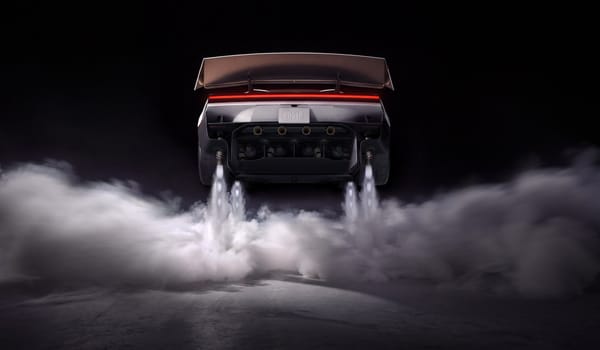
- Thrust ("Race Ready," "limited release"): adds rear cold-gas thrusters. Under 1 second. $250,000 deposit.
- Rocket ("Air Ready," "invite only"): one seat, 10 thrusters around the car. Under 0.59 seconds.
The payments are fully refundable, but Tesla "cannot guarantee when your vehicle will actually be delivered or if it will be delivered," Business Insider reported from the reservation terms.
The ramp trick relies on a fan system supplied by SpaceX that pulls air from under the car. It provides enough suction for the car to sit on an upside-down road, even at a standstill, according to Car and Driver.
Reports differ on how much grip that adds. The Verge cited "up to two Gs of suction force," while Car and Driver says up to 2 g of downforce at 200 mph and less at lower speeds.
Tesla VP of vehicle engineering Lars Moravy told Hagerty the car can "hold over 2 g's in a corner" from zero to 50 mph, Car and Driver reported.
The Rocket also jumped a Model 3, Model Y, Cybertruck, Semi and Cybercab, a move Moravy called "a kick flip." Nobody was aboard: Fortune reported a mannequin in a SpaceX suit, and Musk said the car ran autonomously "for safety reasons."
Its 10 thrusters run on two carbon-overwrapped pressure vessels holding 600 liters and about 250 kg of gas, Tesla said at the event. Tesla called it air on stage, but Moravy described a high-pressure nitrogen system to Top Gear and Hagerty, InsideEVs reported. TechCrunch noted that such tanks have been at the root of multiple SpaceX rocket explosions.
Our explainer on the Roadster's cold-gas thrusters covers how long that gas lasts.
On stage, Tesla clocked the car itself at 0.81 seconds from 0 to 60 mph, after "some technical difficulties with the timer," Electrek noted. By our math, that averages about 3.4 g, above the 3 g limit NASA held Space Shuttle crews to during ascent.
Moravy said the car will top 230 mph, Reuters reported. Tesla claims more than 300 miles of range. Musk said the production version should beat the 0.81-second run, though he acknowledged the need to avoid subjecting occupants to extreme acceleration, The Verge reported.
Regulators have weighed in. The FAA told CBS News that "the Tesla vehicle does not meet the FAA definition of an aircraft," while NHTSA said Tesla must ensure the car meets federal safety standards and that it "will continue to monitor the situation."
The reveal came almost nine years after Tesla teased the car at its 2017 Semi event with promises of 620 miles of range, a 1.9-second 0-60 time, a $200,000 base price and deliveries in 2020, The Verge reported. Musk delayed it in 2020, 2021, 2023 and 2024, according to TechCrunch.
Not every early buyer waited. OpenAI CEO Sam Altman publicly asked for his deposit back and got it, CNBC reported.
Musk has called the Roadster a "small potato situation" for Tesla's finances. The company reports third-quarter results on Oct. 21, according to Reuters.
Follow EngineerPal for coverage of Tesla's Q3 earnings on Oct. 21.